

The Science Behind VocalMist
What the research has looked at
Singers, speakers and teachers have always been told to stay hydrated. For decades, voice researchers have tested what that means for the surface of the vocal folds themselves, and what happens when you breathe in a fine saline mist. Here is what they did, what they measured and where the evidence stops.
Dry air works against your voice
Your vocal folds vibrate hundreds of times a second, and they do it best when their surface is moist. Water you drink takes the long way, through your body. Air you breathe passes right over the folds, and when that air is dry, it pulls moisture off the surface.
Dry air is easy to find: plane cabins, heated rooms in winter, air-conditioned venues in summer, dry climates, long nights of talking over a crowd. Breathing through your mouth makes it worse, because your nose isn't there to warm and humidify the air.
Researchers can see this in the lab. In a study of 60 healthy women, 15 minutes of breathing very dry air raised the air pressure needed to start the voice (Tanner 2007). Fifteen minutes of breathing through the mouth did the same, while breathing through the nose brought it down (Sivasankar & Fisher 2002).
One review of the field put it plainly:
"Bench and human studies provide converging evidence that systemic and superficial dehydration are detrimental to vocal fold physiology." (Sivasankar & Leydon 2010)
And another lists where that surface drying comes from:
"Drying of the vocal fold surface can occur due to environmental and behavioral challenges associated with mouth breathing, exercising, and inhaling poorly conditioned air." (Leydon et al. 2009)
The singer study
The study most often cited in this field was run with classically trained sopranos (Tanner et al. 2010).
- Who: 34 classically trained sopranos.
- The challenge: 15 minutes of breathing very dry air (under 1% humidity) through the mouth.
- What they got afterward, on three different days: 3 mL of nebulized isotonic saline, sterile water, or nothing. Neither the singers nor the researchers knew which (double-blind).
- What was measured: how hard singing felt to them (perceived phonatory effort), and the air pressure needed to start the voice (phonation threshold pressure, PTP).
- What happened: after the dry air, singing felt harder in every condition. With nebulized isotonic saline, that sense of effort went back to baseline. With sterile water or nothing, it was still raised two hours later.
The authors' summary:
"The results from this study indicate that nebulized Isotonic Saline has the potential to reverse the perceived adverse effects associated with laryngeal dryness in singers." (Tanner et al. 2010)
Other labs, other voices
The finding has been looked at again in different people and different settings.
- Young men. In 20 young male singers and non-singers, 30 minutes of dry air made their voices feel more effortful and their throats drier. Both ratings improved after nebulized isotonic saline (Tanner et al. 2016). That study compared two doses (3 mL and 9 mL) and had no water or no-treatment group, and the two doses made no difference.
- Water helped too. In 2025, researchers had 30 women breathe dry air for 22 minutes on three days, followed each time by a 10-minute session of nebulized distilled water, 0.9% isotonic saline or 3% saline. Both the distilled water and the isotonic saline lowered how effortful their voices felt. Only the isotonic saline also moved one measure of voice clarity back toward normal (Kaya et al. 2025). So the evidence on water versus saline is mixed: the 2010 study favoured saline, and this one found water also helped how the voice felt.
- A long day of talking. In a 2024 study, 30 speech-language pathologists were split into three groups: no voice use, an hour of reading aloud, or an hour of reading aloud with a 10-minute nebulized saline session. The saline group rated their voices as less effortful and less tired than the group that read without it, and their pitch and voice-steadiness measures held steadier (Supreetha & Jayakumar 2024). It was a small study, about 10 people per group, with no blinding reported.
- Other measures. Two Brazilian studies recorded what happens at the folds themselves after a saline mist session. In women without laryngeal changes, high-speed video showed the folds swinging less to the side and closing more completely. The researchers read that as a sign of more efficient voicing, and the men in the same study showed essentially no change (Plec et al. 2024). In the second study, the share of each vibration the folds spent in contact rose after 10 minutes of saline nebulization, and self-rated vocal comfort improved (Souza et al. 2023). Neither study had a comparison group.
What a 2026 review found, and what it warns
In 2026, a Brazilian research team mapped the published research on nebulization and other hydration strategies for the voice (de Santana Romeo et al. 2026). They found ten studies, mostly small and mostly in healthy adults, and only a few of them tested saline nebulization directly.
"Nebulization with saline solution demonstrated the most consistent positive results, particularly in acoustic and perceptual outcomes."
They were just as clear about the limits:
"These findings should be interpreted cautiously because of the small samples, methodological limitations, and substantial heterogeneity across studies. Current evidence is insufficient to establish an optimal nebulization protocol or determine its efficacy across different vocal populations."
We think that's the honest picture: a consistent signal on how the voice feels, from a small body of research.
What the research did not find
Several of these studies also measured phonation threshold pressure, the air pressure needed to start the voice. Dry air pushes it up. In the nebulized-saline studies so far, that pressure did not drop by a statistically significant amount (Tanner 2007, 2010, 2016). What changed was how hard singing felt.
When researchers pooled the hydration studies, they described the measurable effects as small, variable and short-lived (Leydon et al. 2010; Sivasankar & Leydon 2010). Most of the studies above were lab tests lasting minutes to a couple of hours. None followed singers through real shows, and none looked at anything beyond that window.
Hydration is a habit, not a fix
Taken together, the research looks less like a one-time fix and more like a habit. Dry air works against the voice within minutes, and a working day can hand you plenty of it: a flight, a heated green room, a set in an air-conditioned bar. That's why the routine matters more than any single session: drink water through the day, breathe through your nose when you can, and give your voice moisture before and after the moments that ask the most of it.
Where VocalMist fits
VocalMist itself has not been studied. The studies above used other nebulizers, doses and lab challenges, all different from ours.
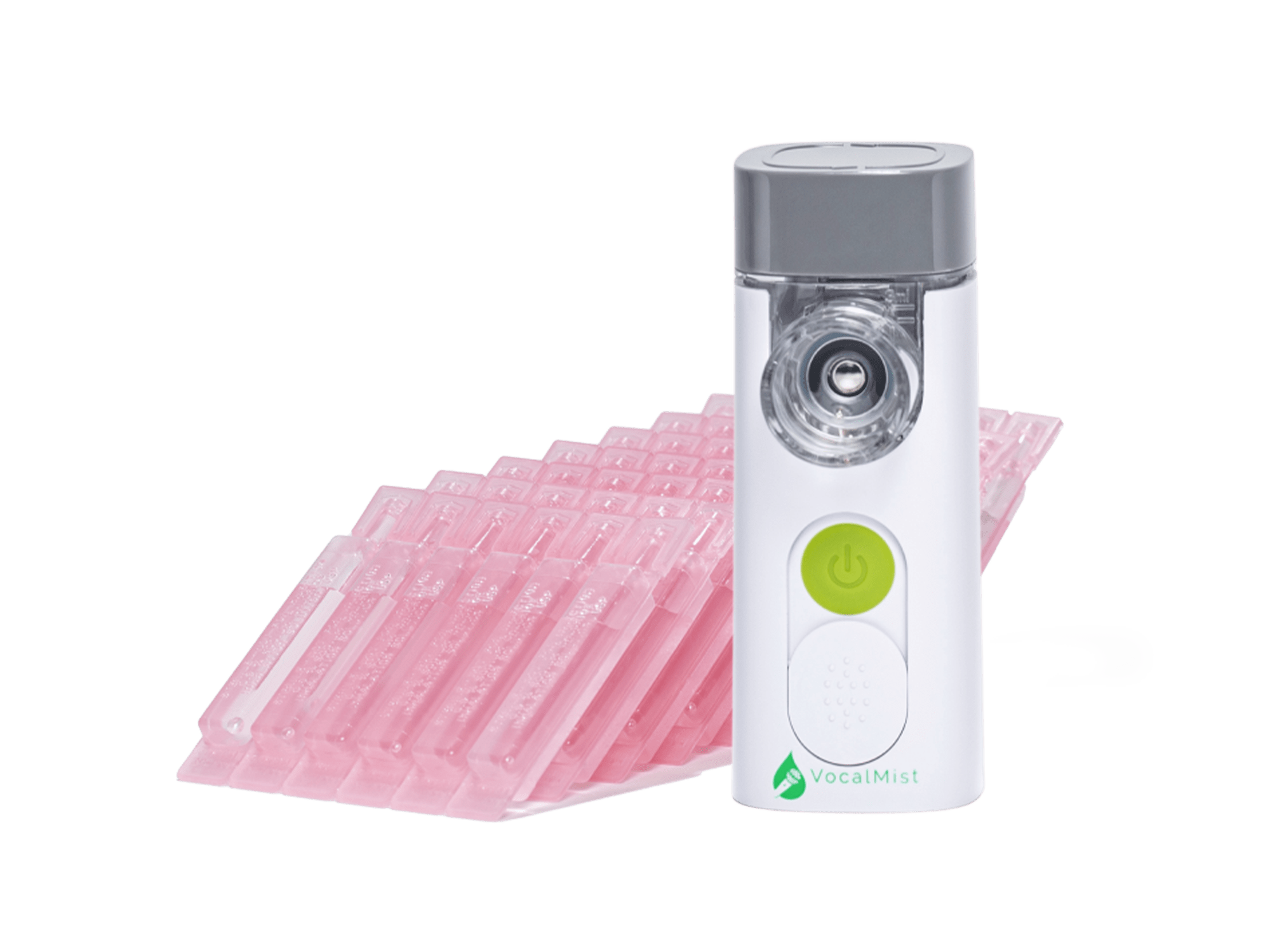
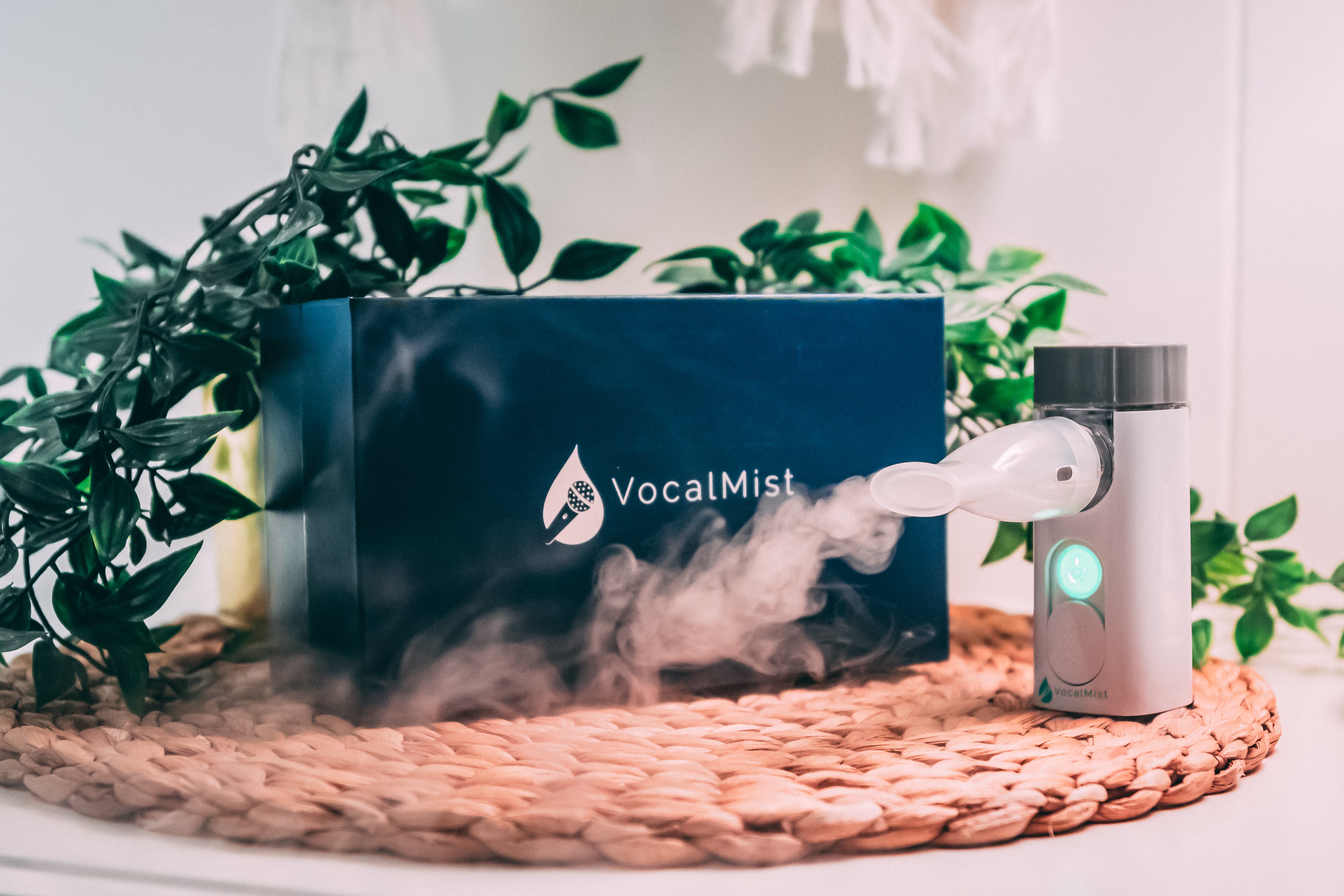
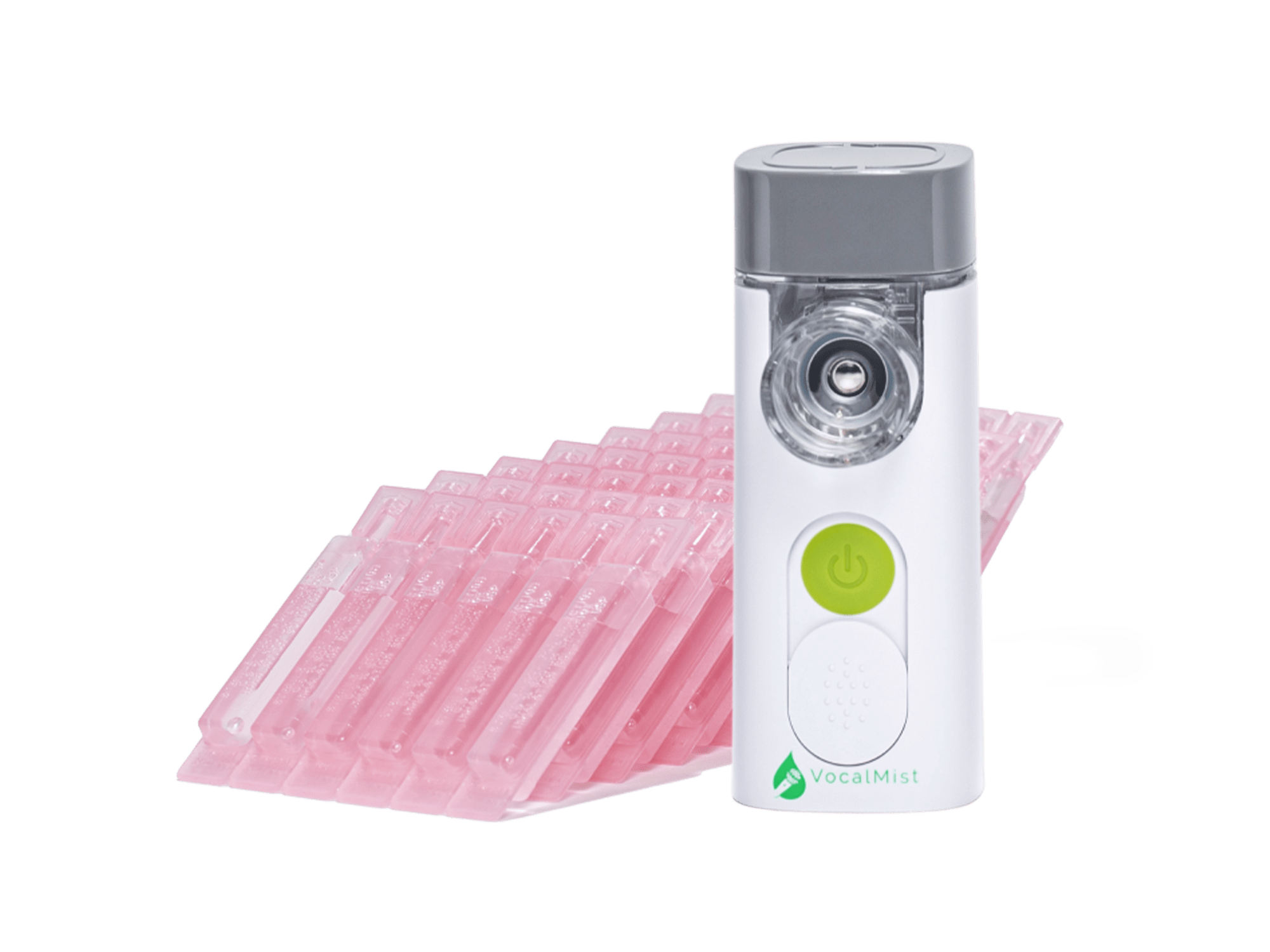
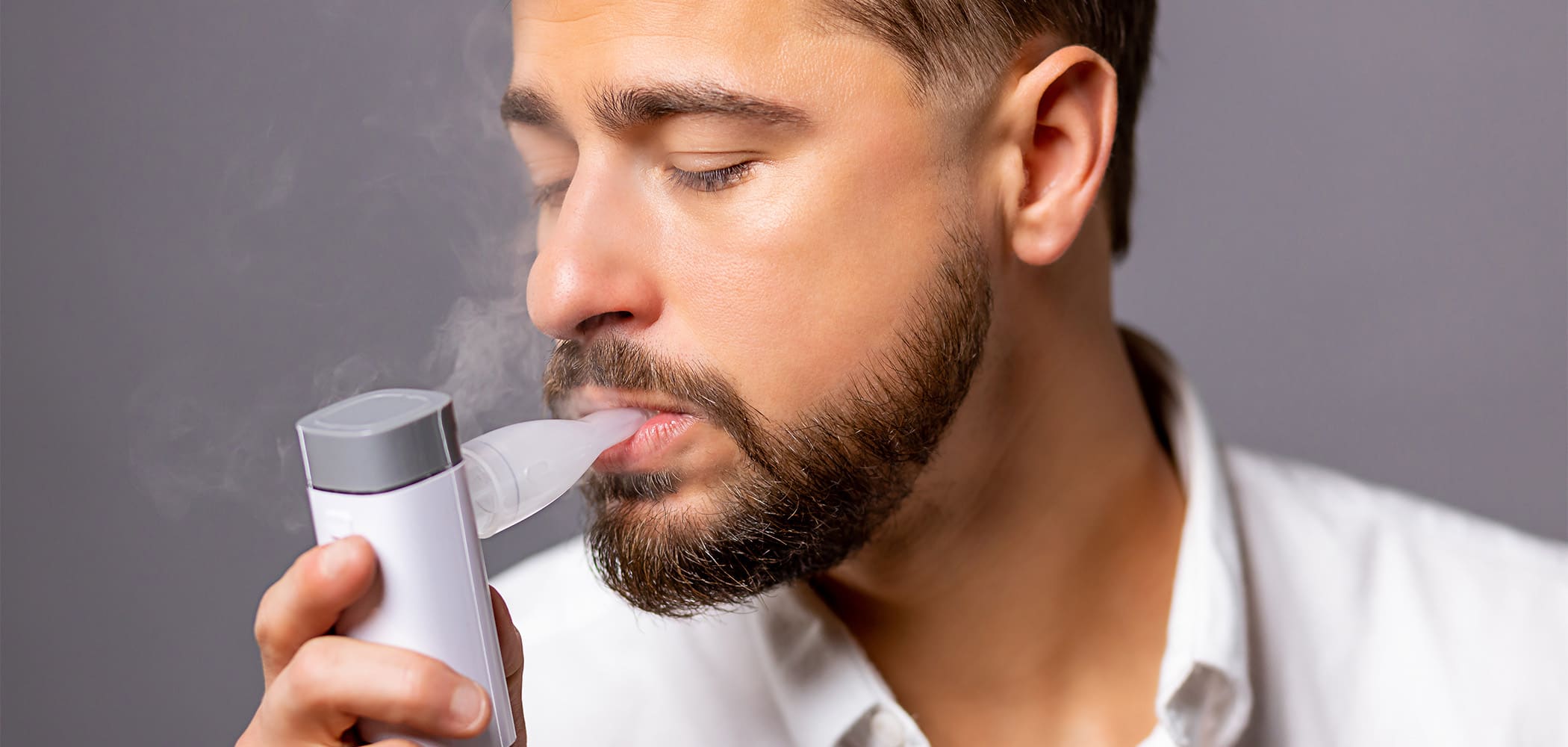
What VocalMist shares with most of them is the solution: Hydration Formula is sterile, preservative-free 0.9% isotonic saline in single-use vials, turned into a fine, cool mist (1–5 μm) that reaches the vocal folds. Use only Hydration Formula in your VocalMist, never water or other "saline" products. Two of the studies above tested distilled water, but that was in lab nebulizers, not in this device.
References
- Tanner K, Roy N, Merrill RM, Elstad M. The effects of three nebulized osmotic agents in the dry larynx. J Speech Lang Hear Res. 2007;50(3):635-646. doi:10.1044/1092-4388(2007/045). PMID 17538106.
- Tanner K, Roy N, Merrill RM, et al. Nebulized isotonic saline versus water following a laryngeal desiccation challenge in classically trained sopranos. J Speech Lang Hear Res. 2010;53(6):1555-1566. doi:10.1044/1092-4388(2010/09-0249). PMID 20699338.
- Tanner K, Fujiki RB, Dromey C, et al. Laryngeal desiccation challenge and nebulized isotonic saline in healthy male singers and nonsingers: effects on acoustic, aerodynamic, and self-perceived effort and dryness measures. J Voice. 2016;30(6):670-676. doi:10.1016/j.jvoice.2015.08.016. PMID 26412295.
- Kaya T, Yılmaz G, Zraick RI, et al. The effect of laryngeal dehydration and nebulized osmotic agents on the voice. J Voice. 2025 (published online Feb 3). doi:10.1016/j.jvoice.2025.01.012. PMID 39904687.
- Supreetha L, Jayakumar T. Thermal, acoustic, and self-perceptual measures of pre-post vocal change after surface hydration in speech-language pathologists. J Voice. 2024 (published online Nov 13). doi:10.1016/j.jvoice.2024.10.019. PMID 39542765.
- de Santana Romeo BRF, Amaral RF, Rocha BR, Ribeiro VV, Behlau M. The use of nebulization for voice across different vocal demands: a scoping review. J Voice. 2026 (published online Oct 15). doi:10.1016/j.jvoice.2026.09.033. PMID 42881049.
- Plec EMRL, Côrtes Gama AC, Souza BO, Santos MAR. Effect of nebulization on laryngeal parameters: analysis using high-speed digital videolaryngoscopy. J Voice. 2024;38(4):970.e1-970.e12 (epub 2022). doi:10.1016/j.jvoice.2022.01.014. PMID 35288013.
- Souza BO, Santos MAR, Plec EMRL, Diniz ML, Gama ACC. Nebulized saline solution: a multidimensional voice analysis. J Voice. 2023;37(4):634.e1-634.e18 (epub 2021). doi:10.1016/j.jvoice.2021.02.024. PMID 33849762.
- Sivasankar M, Leydon C. The role of hydration in vocal fold physiology. Curr Opin Otolaryngol Head Neck Surg. 2010;18(3):171-175. doi:10.1097/MOO.0b013e3283393784. PMID 20386449.
- Leydon C, Sivasankar M, Falciglia DL, Atkins C, Fisher KV. Vocal fold surface hydration: a review. J Voice. 2009;23(6):658-665.
- Leydon C, Wroblewski M, Eichorn N, Sivasankar M. A meta-analysis of outcomes of hydration intervention on phonation threshold pressure. J Voice. 2010;24(6):637-643. PMID 20359862.
- Sivasankar M, Fisher KV. Oral breathing increases Pth and vocal effort by superficial drying of vocal fold mucosa. J Voice. 2002;16(2):172-181. doi:10.1016/s0892-1997(02)00087-5. PMID 12150370.